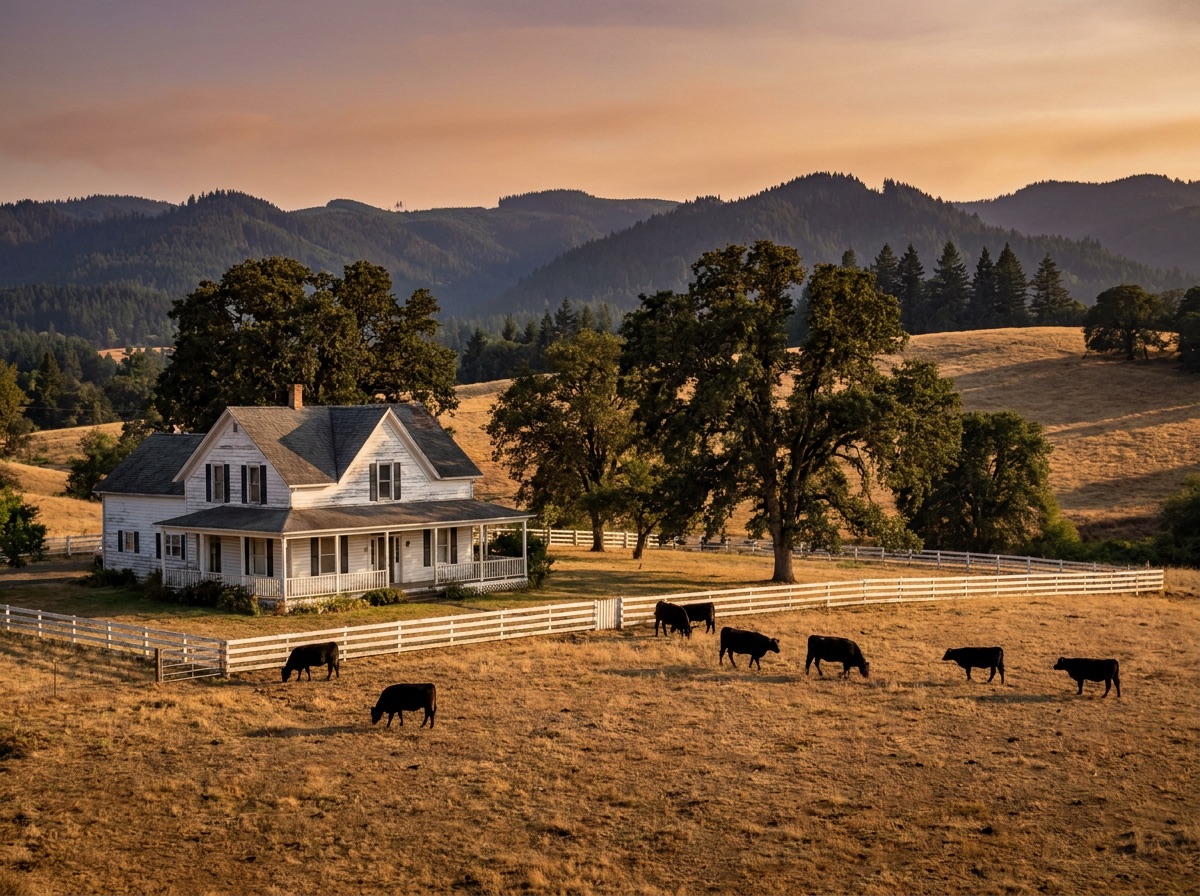
If your plan is to buy or sell a farm or ranch in the Yoncalla area, local knowledge isn't optional — it's the whole game.

The local picture matters. Rolling pasture parcels, century farmhouses, and south-facing slopes that work beautifully for gardens, orchards, and vineyards. Well production varies by ridge — pull well logs early.
Kimmy brings the specialty side. Cattle ranches, hay operations, century farms, and everything with a barn on it. Kimmy grew up around livestock, rides her own horses daily, and understands what makes agricultural ground actually pencil — soils, water, fencing, outbuildings, and farm tax deferral.
Yoncalla was settled by the famous Applegate family — blazers of the Applegate Trail — and their 1852 home still stands. The town sits in gentle oak-and-pasture hills in north county, quietly becoming a haven for small farms and homesteaders.
| Population | ~1,100 |
| Drive to Roseburg | 30 minutes |
| Known for | Charles Applegate House (1852) · Applegate Pioneer Cemetery · Yoncalla Creek valley |
| Lifestyle | Homestead culture, farm stands, and history in every fence line. |
You want an agent who combines genuine farm & ranch expertise with parcel-level Yoncalla knowledge. Kimmy Karlovich lives the rural Douglas County life daily — horses, land, hunting, rivers — and serves Yoncalla as core territory (about 30 minutes from her Roseburg base). Call 541-643-9509 for a straight local conversation.
EFU (Exclusive Farm Use) is Oregon's agricultural zoning. It protects farm ground but limits what can be built — typically requiring a farm-income test or specific dwelling approvals for new homes. What an EFU parcel can and cannot do is knowable in advance — get the answer before you get attached.
Oregon water rights are use-it-or-lose-it and attached to the land, not the owner. A right can be lost after five consecutive years of non-use. Before closing, Kimmy verifies the right's status, priority date, and place of use with the Oregon Water Resources Department — because pasture without water is just dirt.
Yes — depending on soil and irrigation, Umpqua Valley pasture typically runs one cow-calf pair per 2–5 acres on dryland and better on irrigated ground — soil class and water make all the difference.
Whether you're buying your first five acres or selling the ranch that raised you — call, text, or email. Kimmy answers.
541-643-9509