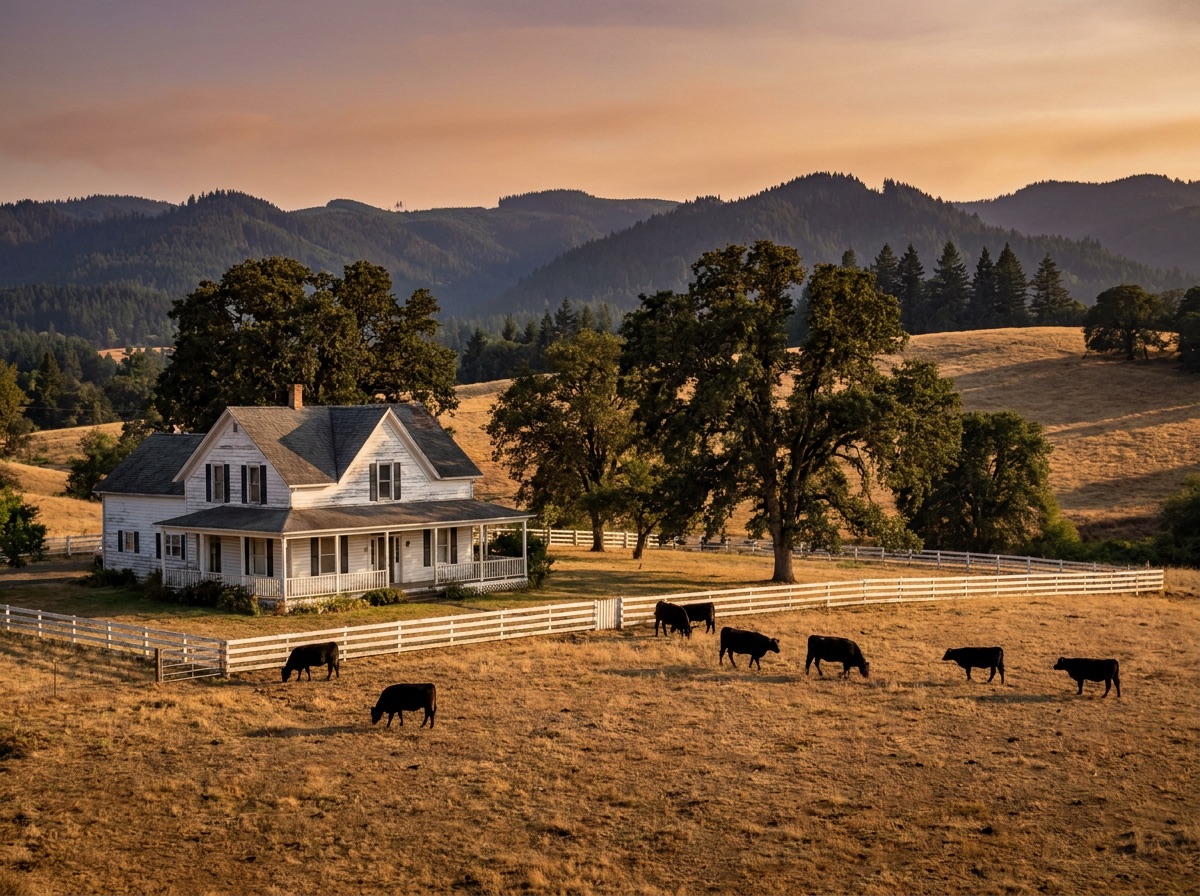
Melrose — Roseburg's wine-country backyard — has a character all its own, and for anyone hoping to buy or sell a farm or ranch here, that character shapes everything.

What does that mean on the ground in Melrose? Horse setups, small vineyards, and custom homes on 5–40 acres. Inventory is chronically tight; buyers with a ready file and an agent who hears about listings early win here.
Kimmy pairs that community knowledge with deep farm & ranch expertise. Cattle ranches, hay operations, century farms, and everything with a barn on it. Kimmy grew up around livestock, rides her own horses daily, and understands what makes agricultural ground actually pencil — soils, water, fencing, outbuildings, and farm tax deferral.
Melrose is the rural district just west of Roseburg where vineyards, horse properties, and view homesteads roll across oak hills. It's arguably the county's most in-demand rural address: full country living, ten minutes from a hospital.
| Population | ~700 |
| Drive to Roseburg | 10 minutes |
| Known for | Melrose Vineyards · Doerner Road wine loop · Flournoy Valley |
| Lifestyle | Morning rides, evening tastings, town in ten minutes. |
You want an agent who combines genuine farm & ranch expertise with parcel-level Melrose knowledge. Kimmy Karlovich lives the rural Douglas County life daily — horses, land, hunting, rivers — and serves Melrose as core territory (about 10 minutes from her Roseburg base). Call 541-643-9509 for a straight local conversation.
EFU (Exclusive Farm Use) is Oregon's agricultural zoning. It protects farm ground but limits what can be built — typically requiring a farm-income test or specific dwelling approvals for new homes. What an EFU parcel can and cannot do is knowable in advance — get the answer before you get attached.
Oregon water rights are use-it-or-lose-it and attached to the land, not the owner. A right can be lost after five consecutive years of non-use. Before closing, Kimmy verifies the right's status, priority date, and place of use with the Oregon Water Resources Department — because pasture without water is just dirt.
Yes — depending on soil and irrigation, Umpqua Valley pasture typically runs one cow-calf pair per 2–5 acres on dryland and better on irrigated ground — soil class and water make all the difference.
Whether you're buying your first five acres or selling the ranch that raised you — call, text, or email. Kimmy answers.
541-643-9509